
Portraits of young men entangled with the law in the 1980s
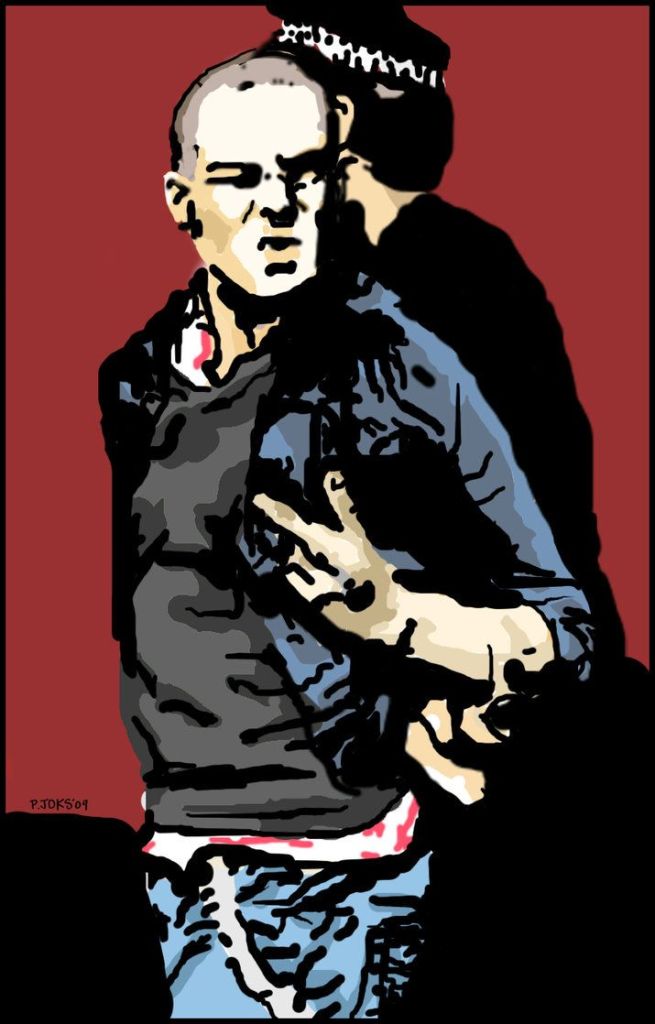
The following sketches were all written in 1985 just after I finished working at the hostel. The name of the hostel and all personal names have been changed.
The Hostel
When I arrived at St. Cecilia’s in July 1984 I knew next to nothing about Probation Hostels. I had imagined the building to be old and Victorian, full of dark corridors and musty corners, but it was clean, spacious and cubic – the smell of floor polish was the first thing you noticed.
All the lads who stayed there were aged between 17 and 25 and, after an initial month’s assessment, agreed to a Condition of Residence for a year which was part of their Probation Order. On first inspection they could be quite frightening : a motley bunch of skinheads with earrings, unshaven lads with a mean glint, tall and muscular types with cruel bodies. This impression was offset though by a good number of very ordinary looking, conservatively-dressed, characters ; some quiet and withdrawn.
My first dealings with them were cautious to the point of circumspection. I was as fresh to them as the newest copper would be on his first beat on the streets and, predictably, they tried to take advantage. Borrowing money or playing me off against other staff members were the commonest tests, and it soon taught me to talk straight and act as if I knew what I was doing. It often felt like a game of blind man’s bluff where you were neither sure of what they said or what you said. But gradually, as my confidence grew, and the ground rules became familiar, the residents became less troublesome over minor matters.
Every client who came to St. Cecilia’s was treated as an individual, and yet he was also part of the resident group : a sure recipe for conflict. From the moment of their arrival they were sized up and matched to various staff members through a Keyworker system. Difficult ones would go to Bob since he enjoyed the challenge – their behaviour and his own abrasive nature suited him well to the task. Jenny took the ones who needed same mothering ; a sensitive and listening character with a hard and censorious streak – her clients got love and sympathy but if they stepped out of line they knew all about it. We were like a family in many respects, many of my clients saw me as an elder brother figure and it was often a struggle not to appear patronising.
Though this “family” structure was not explicit (despite the fact that a number of residents called the Warden “Mum”) it was perhaps unconsciously the best way of smoothing the rough edges where the disciplines of Care and Control chafed. Every resident knew the rules of the hostel, and the penalties for breaking them, but the Keyworker system ironed out the damage of conflict with the hostel rules and frequently helped by providing a safety valve where such problems could be talked out. In social work circles it is fashionable to deride rules and restrictions but the role of control in St. Cecilia’s was almost as important as the part played by caring.
Many of our residents could not control themselves – that’s why they got to trouble with the law. To expect them suddenly, miraculously, to exercise self-restraint was impossible – the rules of the hostel were designed to help them learn the methods and structures of building that self-control. As they stayed longer the rules were relaxed, their personal responsibility encouraged, and their self-discipline fostered.
However, the emphasis on personal responsibility that we saddled on clients could very often be a misguided imposition of one set of values and experiences on an alien and unresponsive territory. Their offending behaviour was described as their personal responsibility and they were pressured, cajoled, influenced, to admit that had only themselves to blame for getting into trouble. But, how often have I heard the phrase “easily led” of a client – few people who get into trouble at that age go it alone or plan their crimes in a premediated fashion. To my mind the emphasis on personal responsibility did not take account often enough of the context in which these young men were getting into trouble.
So many were from broken homes and disastrous backgrounds ; unemployed, bored, needing something to do. In the wrong places, at the wrong times, how could they be expected to say “no” to their friends and mates – often the only people from whom there was anything resembling love. It’s a tall order which few of us sitting on the other side of the desk could cope with.
In the environs of the hostel it wasn’t surprising then that there were always suspicions about the activities of residents outside the hostel. Very often the only way guys would go straight was by getting a steady job – the threat of losing a regular wage and the security it offered was far greater than the threat of a custodial sentence.
Andy Brock 1987
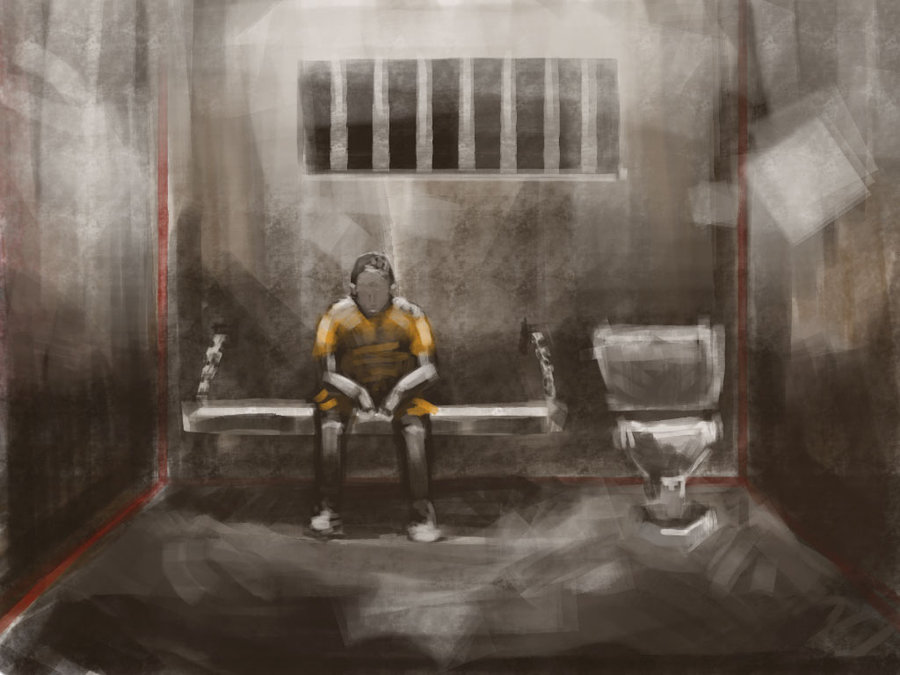
Tommy
In any group there are always leaders, and amongst the fraternity of the hostel this was no less true. Fights between residents, or confrontations with staff, were variously ascribed to a particular resident’s mood or perhaps his “immaturity” in handling angst. Indeed, this could be the case, it often was, but it was just as likely to be the outward signs of a power struggle for leadership, the roots of which staff would rarely see.
Tommy was one of these group leaders, a small, lean skinhead with a pugnose face, tattoos down both arms and a nose ring. I remember an incident he fabricated at tea the day two new residents arrived. On receiving his meal at the serving hatch he declared it to be “fucking pigs muck” and with a show of disgust thrust it back through the serving hatch, swearing at the cook for good measure. No amount of remonstration by myself made any impression and Tommy stalked ostentatiously out of the dining room without waiting to be told to leave. Whatever disciplinary action was taken later was not important, the message was clear, round this patch Tommy was not to be trifled with.
Dealing with Tommy involved many such incidents in the first few months of his stay. He resented being treated as one of the group and craved individual attention for good and bad behaviour alike. Yet, there was a sweet, good-humoured and even endearing side to Tommy. As he began to feel more comfortable about his surroundings and about his position in the group, this softer side showed more often. Liking the hostel more, he started to appreciate the security it offered him and the friendships of staff and residents.
Tommy was one of these local criminals known so well to the police that he was on friendly terms with many of them. His desire to please those in authority adapted easily to the hostel staff. Unfortunately for Tommy this desire was not as strong as the urge to impress has peer group. A few months after his arrival at the hostel he was charged along with some other residents with burglary of an electrical shop. He was fortunate to be bailed, the others were remanded.
As the court date drew closer Tommy became visibly up-tight, a frown of worry continually marked his seal-pup face and he reverted, occasionally, to his old behaviour – but, now the penalties were higher. Every incident, every confrontation could affect the decision of the court – it was a veiled threat the staff used consciously to keep Tommy within certain boundaries of order. Catch-22 ; Tommy’s confrontations were expression of pressure and stress, outbursts of frustration – but his returning to the hostel depended on good behaviour and a good report.
In tears one night after one of these flashpoints he confessed to being petrified of getting put away again. He’d messed up his life he said, he knew that, he’d made mistakes, plenty of them – but he wanted to change, to learn to change. He saw the effects of his behaviour and he didn’t like it, but going behind bars would make him worse. He’d done enough time, he couldn’t face more months or years locked away, he couldn’t, he just couldn’t.
It was a plea that hit deep. And yet, always in the back of my mind was the thought that I couldn’t say, “It’ll be alright, Tommy” because he and I both knew it wasn’t up to me.
Many would say Tommy had been given his chances and had blown them, even Tommy’s own sense of right and wrong (operated dispassionately) might have said this – “you takes your chances, you pays your price”. And yet, we humans are in the business of making mistakes and ignoring warnings. It’s in our nature to fail, to resist advice and counsel. We then, who form that part of society that judges and punishes, we then, the arbiters of morals, laws and ethics must allow passion to affect our decisions, we must permit our humanity to balance, and even overrule, our logic. The Tommies of this world need constant and repeated forgiveness, the space to make mistakes and learn from their weaknesses – for how will they ever change without the space and room to gain this their maturity, to understand their own failings ?
Would that these words should come from Tommy, but, alas, he had neither the understanding nor the capability of expressing himself adequately to those who sat in judgement on him. Instead, others (apologetically) plead for him ; a solicitor to interpret the language and customs of the court, a probation officer to explain, in the refined language of the court, why Tommy should be allowed one further chance. And all the time, Tommy in the dock with forehead furrowed, standing upright with his smartly pressed shirt and shiny shoes (which the magistrate could not see), looking intent, apologetic, prepared to say anything, anything – only let me go free.
Who knows what the magistrate saw that day – a smart skinhead who looked like trouble, or a smart skinhead who looked a bit sorry for himself ? In all probability it didn’t matter, it was what other people said about Tommy that let him walk out of court instead of down to the cells. Tommy might have had a lot of muscle and a mighty voice in the hostel – but he was spoken for.

Johnny
When he came to the hostel, for stealing a pint of milk from a shop doorstep, Johnny was 23, a tall, big-boned lad with rotten teeth and untidy red hair. His body was strangely shaped, cruel, full of violent potential and marked by the effects of a gas fire explosion. The scars this explosion left showed like melted plastic on his neck and spread, dripping like paint, across his arms and down his chest and stomach.
The effects of this accident were more than physical – to Johnny they constantly reminded him of his unhappy childhood and the continuous prejudice he had to face. A succession of jobs finished prematurely because of scapegoating and mockery. Sometimes, as a defiant gesture to the snide remarks he would stride out of the hostel shirtless, goaded by a childish impulse to shock : “Yes, I’m different, and what are you going to do about it ?”
Such defiance, however, was a transient façade, since, generally, Johnny’s self-esteem was low. Seen as a freak, he tried doubly hard to please, bending over backwards for anyone who would show him some kindness. And this was how he came to be involved with the probation service, as the willing fool who committed petty crimes for others. But, he also had a mean streak through him, a stubbornness not influenced by others. Given freer rein it was to be his downfall.
The initial assessment of Johnny, intended to isolate his difficulties and weaknesses, might easily have been summarised as “everything”. There were problems with hygiene and finances, self-discipline and drinking, relationships and stress, depression and work, maturity and responsibility. Enumeration was the task, not isolation.
During the eight months of his stay at the hostel his life was crammed with drama. On several occasions he took mild overdoses of sleeping pills and enuresis tablets (for bedwetting), he frequently cut his throat and hands with safety razors and was once rushed into hospital for a heart complaint.
He befriended strange men on the local common, dabbled in glue sniffing, and most dramatic of all changed from a sycophant to a bully. Through all of this his engaging humour made him likeable and friendly, even if the jokes were always directed at himself. On a sailing trip to Holland he was once found below decks with his head in a bucket, muttering in a muffled voice “The bells! The bells!”
This young man who had absconded from another hostel because of bullying, came to us timid, mild and desperate to find favour. When he was evicted the next year he had received two letters of warning for bullying others and owed £70 in rent arrears. Was this change or degeneration?
Johnny had come to us seeking stability and love. What he found was an environment of care and trust where he was encouraged to stand up for himself and not play the Joey for others, where he was given increasing measures of trust and responsibility and where his outbursts of anger and depression were not regarded as something abnormal and threatening but were understood and accommodated.
So where did we, or he, fail ? Did he change so fast that nothing or no one could have controlled him or did we provide an environment he couldn’t handle because of the responsibility it gave him ? Or did society fail us both ? In a society demanding that individuals take responsibility for themselves, that they cope with money, food accommodation and jobs – where was this young man from an inadequate and deprived background, lacking the skills to look after himself, where was he to find his place?
Tell me how many years it takes to teach concentration ? Tell me how many years it takes to teach the self-discipline necessary to nurse a social security cheque for a month ? Tell me how many years it takes to inculcate self-respect and a sense of responsibility ? Tell me all this and I’ll give you an answer.
Johnny found the space in his time at the hostel to change, or perhaps to show us what he was really like – and it destroyed him. From a restrained, timid, young man he became assertive, aggressive, a leader of the group. This was a real part of Johnny, but not a part he could control – the discipline of freedom is far harder than the chains of constraint.
After numerous warnings, both verbal and written, Johnny was told he could no longer stay at the hostel as he was too disruptive. On the day he was evicted he begged to be allowed to stay. Trembling, and in tears, he was so shaken by the reality of the words he had been dreading to hear that he collapsed and could not stand for ten minutes. After months of asking, even demanding, to leave, the door was open and he realised the dark image of the truth than confronted him.
Do we learn from our lessons ? Does punishment prevent us from making the same mistakes again? Not for Johnny. Traumatic though the experience of eviction was, within three months it had happened again at a different hostel. From hostels to squats, from squats to park benches, relentlessly downward. Does the spiral end when you take away responsibility ? Put Johnny in prison – will he be better off ?
Here was a man for whom life was a series of disappointments, a man who had been kicked in the teeth from an early age. How can we, who know only security, know what it means to constantly fail, know what it means to measure life’s milestones in disasters, not achievements ? Who can take responsibility for that ?

Gary
Gary was one of these clients who makes you draw your breath inwardly at first sight and think “this could be trouble”. But, as the truism goes, appearances rarely tell the truth.
Gary was 18, thin not skinny, about five foot eight and had a spider tattooed on the left side of his neck, on the right side was a large black and red cobweb. The picture was completed by a gold coloured bolt through the top of his left ear and a complete absence of hair, except for his face where there was something he referred to as “my caterpillar” attempting to grow on his top lip.
Every report l read about Gary described him as “immature” or “very immature” or of “below average intelligence”. Gary agreed – after I explained what immature meant.
“Yeh, l don’t act like I’m 18, do 1? ” he mused candidly. “How do you get mature, man ?”
A good question I thought. Is there a formula ? If there is how do you explain it to someone who may be too immature to understand ?
Gary came from the North. He was from a large family : a sister, step-sister and two step-brothers. His natural father had left the home when he was eight, Gary was too young to understand why. One time, years later, hearing that his father was in Scarborough, Gary bought a ticket and took the train to the seaside town. When he got there he aimlessly searched the streets without even an address or a name to go by. He returned disillusioned and bitterly disappointed.
His mother couldn’t handle the kids and refused to allow her new husband any influence in decisions affecting them. Consequently, Gary got into bad company, into bad trouble and eventually into bad habits – glue sniffing.
“It’s doin’ ma head in, man” he used to complain in his thick northern accent, but he couldn’t get off it because what else was there to do on the dole? He’d tried to get jobs but his appearance, with his short-cropped hair and spiders, put employers off. At one site he went to for a labouring job he presented himself to the foreman who looked him up and down and said :
“Well, do you want to bugger off now, or later?”
In these circumstances he was fortunate to have a sense of humour, it was something other than the glue which kept him going.
“Oh man,” he would say “I’ve left my virginity on the bus. I went to lost property but no-one had handed it in”. It was this peculiar stoicism, a dry humour in the face of an overwhelmingly bleak future that endeared Gary to the rear of the residents. In a way that was almost characteristically Northern he expressed one lighter side of a depressing prospect that faced all the lads at the hostel.
As with so many of his companions there was a potential in Gary which was not difficult to see if only he could keep out of trouble and be given the opportunity to develop it. But, where were the opportunities? With 4 million on the dole it was a generous employer who was prepared to give an offender a chance, even one chance, because there was no room for latitude or error.
In counselling with Gary the blame for his offences was directed at him as an offender. It was his personal responsibility we emphasised time and again – if he got into trouble he only had himself to blame. No matter that he stole for money, because he’d spent his giro, next time make your giro last, we said. Though never for a moment could we dream of surviving on £9.75 a week in London.
Gary was a typical recipient of Probation Service confusion – where the desire to see people as individuals, worthy of care and attention, obscures or ignores the circumstances of their criminality.
Gary’s story was little different to that of hundreds of residents who passed through the hostel : a deprived and difficult family background, a history of truancy from school, bad company and finally trouble with the police. And yet, with each and every one the tendency was to play down the similarities and mark up the personal differences.
After a few months Gary was in trouble once more, arrested for burglary and bailed back to the hostel. A worried look agitated his expression and in supervision he confessed to being scared of going down. Why had he done it ?
“I didn’t think about it, man, I needed the money”
What could I say to that ? Get a job ? Be happy with £9.75 a week ?
It was at times like these that I felt that whatever I had to say was bound to be wrong since I could only apologise for a society that forced its poorest members to play Russian Roulette with their lives.
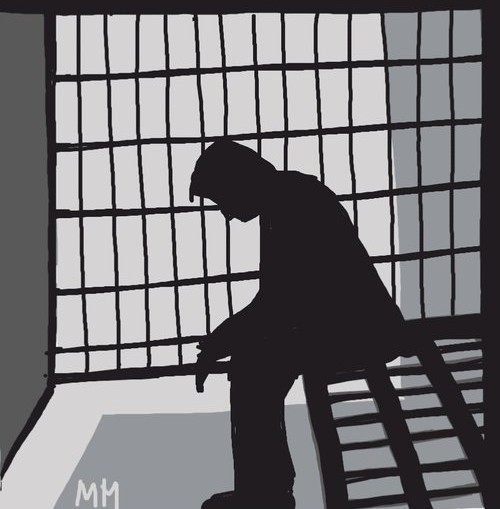
Jimmy Mac
Often the clients you feel most sorry for are not those who live in the hostel, but those who have left and for one reason or another are making hard going of “reality”, as it’s called in social work jargon. Jimmy Mac was one of these.
It happened to be my misfortune that I was on rota to work every Friday evening which also entailed sleeping-in until the following morning at 8 o’clock. It was my misfortune because, almost without fail I could expect the phone to ring between 12 p.m. and 2 a.m. with a distraught, depressed and generally very pissed Joe on the other end of the line.
“Can ah speak to Mrs S, please” he would mumble, slurring his words so that, had I not been able to pick up a Scots accent, he might as well have been speaking Italian. For the next few minutes we’d play ball back and forwards across the net. I would say Mrs. S. was in bed, she was tired, could he not phone in the morning ? Joe would listen while I spoke and simply repeat, after every plea on my part for the Warden’s peace, that he had to speak to Mrs. S.
“I’ve got to speak to her, I’m so depressed. She won’t let me see my bairns. The bastard won’t let me see my bairns”. This last a reference to his estranged wife.
Sometimes I could put him off, but mostly I had to put the call through. What was said then I never knew but I only had admiration for a woman who would allow her compassion to disturb a good night’s sleep.
So many of these ex-residents came back, miserable and unhappy, finding it a Herculean task to keep their heads above water when no-one had ever taught them to swim properly. The ones who did not re-offend and go down, went from place to place trying painfully to cope with money and life on the dole. They returned to the hostel every now and again looking cheerful, smiling and saying everything was “alright” ; but they the always looked thinner.
Jimmy had had a hard life as a kid in Glasgow. By his own admission had been a “little bugger” – keeping his cool was not a strong point. After 6 months he was kicked out of the hostel for assaulting another resident. But, even in that short time he’d come to identify with the staff and particularly the Warden, Mrs S. Without fail, every year afterwards he would send or bring a bunch of flowers on Mothers’ Day, and a card poignantly written.
One of the rocks in life’s swirling eddies, a strong point in the confusing and rapid currents, the Warden was a figure to grasp at, a safe point to return to.
How many of these “mothers”, ready to be there, ready to listen, ready to pick up the pieces – how many are there out there in Probation offices, hostels, social services, helping agencies, patching up the cracks and papering over the damage done by others ?

Uncle Jerome
Uncle Jerome was a preacher. I don’t know why I called him Uncle Jerome, it just seemed right – and it stuck.
Uncle Jerome had found God in a big way ; what sort of a God he was I could never figure out but he seemed largely fire and brimstone, full of wrath and finger-pointing judgments and not a great deal of compassion – especially for the rest of the sinners who inhabited the hostel.
Uncle J (it was a strange name especially as I was older than him and in a “position of authority”), all smiles and flashing teeth would stroll out of the hostel, lolling a little from side to side, bowing to people he passed outside the hostel. In his hand he always carried a crocodile-green leather briefcase with gold-coloured locks on the top, it made him look very business-like and quite transformed his appearance. The only item ever to have the pleasure of using this stylish convenience was Jerome’s large leather-bound and dog-eared Bible, a book which saw much use.
Jerome’s relationship with God was a very noisy one, as befits a preacher I suppose, and where other residents had to be asked to turn their radios off for fear of disturbing the neighbours, Jerome had to be requested to turn the level of praying down a few stops.
At these requests he would always grin and shrug his shoulders, swaying lightly from foot to foot and spreading his hands as if to say : “Who me ? Making noise ? !” The rather literal and traditionalist views of the “Word” that he took left him firmly of the belief that only by shouting out of windows into open space would his prayers be heard – “But Jerome”, we said, “God will be deaf by now with all this shouting”.
Like many an evangelist before him he took the Bible’s exhortation to go out and convert the people as beyond interpretation. No-one escaped Jerome’s reforming zeal – “Repent ! Repent ! You are sinners and God will judge you on the last day “ – such messages were not well received in the hostel.
The mere mention of God often made other residents turn white with anger and Jerome suffered many trials, many martyrdoms, on account of his faith. Peanut butter in his bed, verbal and physical abuse – he was nor spared in the beginning, but after a few months he stopped provoking the others with his injunctions to purge themselves, and they in their turn respected him enough and left him to his own biblical ramblings and talking in tongues.
During the week he would go to different parts of London to preach usually in markets or shopping precincts where he could shout at a lot of people. As he went into his routine about the Day of Judgment, Sin, or the next coming of Christ, he would do little dances too, stamping his feet, flailing his arms and sweating profusely. More often than not he would draw the crowds as much through these antics as for what he was saying. In any case what he was saying very often did not make sense when you listened to it, but there was no telling Jerome that.
Amongst the staff there was serious concern about the state of Uncle Jerome’s mental health. And yet there were no delusions, he wasn’t claiming to be Christ or a new messiah, he was a simple servant for whom, he once told me, death would be a blessed relief since, as his body was really already dead, his spirit would then get into the ranks of the archangels. I advised him to get harp lessons as soon as possible, at which he laughed long and heartily.
Preaching was not without its perils as Uncle Jerome solemnly informed me one summer’s evening. That day, he confided, he had been preaching in Lewisham market when an egg whizzed by his ear. Undeterred, he launched into another full-blown tirade against the wages of sin and the imperative of repentance. This time he was stopped short by a potato landing full on his shiny nose. “I loved it” he said. “It made me stronger”. I could just picture him being cabbaged to death and encouraging his assailants.
A short while later at the train station he was threatened three times with a sudden confrontation with the next train. Luckily for Jerome, or unluckily, the next train didn’t come because of a local strike. Perhaps martyrdom was Jerome’s vocation in life. And if it did nothing else except distance Uncle Jerome from reality, Christianity kept him out of criminal trouble.
Society has always had its Hyde Park speakers, its itinerant evangelists preaching the Day of Judgment – a group of people who are perhaps ever so slightly unbalanced but who don’t pose a threat to the rest of us except inasmuch that we may not want to hear what they have to say.
Uncle Jerome, with his diminutive little shuffle and cheery face, was one of the pleasantest of these latter-day performers you could hope to meet.
 Brocksblog